SELECTED CASES
A selection of clinical cases demonstrating restorative, aligner and multidisciplinary treatment — with an emphasis on careful planning, preservation of tooth structure and natural-looking outcomes.
Every case starts with diagnosis. Treatment comes second.
ALL CASES
RESTORATIVE
COMPOSITE BONDING
ALIGNER + RESTORATIVE
MULTIDISCIPLINARY
FEATURED CASE
ALIGNERS + WHITENING + COMPOSITE BONDING
THE SMILE
BEFORE

AFTER

Treatment planned around the smile, not simply the position of individual teeth.
THE CHALLENGE
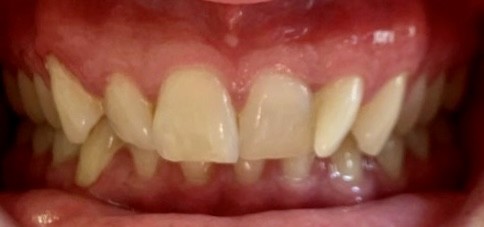
George was self-conscious about his teeth and uncomfortable smiling naturally. The aim was to improve tooth position and proportions while keeping the final restorative treatment as conservative as possible.
THE PLAN
Treatment began with 24 sets of clear aligners to improve tooth position and create the foundation for the final result. This was followed by four weeks of whitening and direct composite build-ups/veneers across the upper six anterior teeth, from upper right canine to upper left canine.
THE CLINICAL CHANGE
Position first. Restore second.
BEFORE
AFTER

24 SETS OF CLEAR ALIGNERS
Tooth position was corrected first using clear aligner therapy. Following alignment and four weeks of whitening, direct composite was used across the upper six anterior teeth to refine proportion, shape and symmetry while preserving natural tooth structure.
THE OUTCOME
By combining tooth movement with carefully planned restorative treatment, we were able to create a more balanced, natural-looking smile.
Most importantly, George went from feeling uncomfortable showing his teeth to smiling naturally and confidently.
TREATMENT
24 sets of clear aligners
4 weeks of whitening
Composite build-ups/veneers across the upper six anterior teeth
TIMELINE
Under 6 months
CLINICAL FOCUS
Position · Proportion · Preservation
COMPOSITE BONDING
A fractured anterior tooth was restored using direct composite, rebuilding the missing tooth structure while preserving the surrounding healthy dentition.
THE RESTORATION

BEFORE

AFTER
ONE TOOTH. CONSERVATIVE RESTORATION.
A direct composite restoration was used to rebuild the fractured anterior tooth, restoring its form and integrating it with the surrounding natural dentition.
THE CHALLENGE
The challenge was to recreate the missing form while respecting the existing shape, colour and individual characteristics of the surrounding natural teeth.
THE PLAN
Treatment was limited to the fractured tooth. Direct composite was layered and shaped to recreate form, surface anatomy and texture without altering the neighbouring teeth.
ANOTHER PERSPECTIVE

BEFORE

AFTER
The lateral view demonstrates the restoration of the fractured incisal form and its relationship with the neighbouring natural teeth.
TREATMENT
Single-tooth direct composite restoration
TIMELINE
Single restorative appointment
CLINICAL FOCUS
Form · Texture · Preservation
SELECTED CASES

BEFORE

AFTER
BEFORE
AFTER
01
COMPOSITE BONDING
Restoring a fractured anterior tooth
Single-tooth direct composite bonding.

BEFORE

AFTER
03
ALIGNER + RESTORATIVE
Creating space. Then using it.
Creating space for a considered restorative result.
03 ORTHO-RESTORATIVE
This case was planned backwards from the desired restorative result. Clear aligner therapy was used to deliberately redistribute space and create the correct foundation for the restorative phase.
THE CLINICAL SEQUENCE

01 BEFORE

02 POST ALIGNMENT
03 FINAL
The spaces created through orthodontics were intentional. Redistributing them allowed the final restorations to be designed with more appropriate proportions.
THE PLAN
Tooth position and space were established first. Whitening was then completed before the definitive restorative phase, allowing the final restorations to be designed with more appropriate proportions.
ANOTHER PERSPECTIVE

BEFORE
AFTER
The lateral view demonstrates how tooth position, projection and restorative form were planned together.
TREATMENT
Clear aligner therapy · Orthodontic space redistribution · Whitening · Composite veneers · Bridge
APPROACH
Orthodontics followed by restorative finishing
CLINICAL FOCUS
Space · Position · Proportion · Preservation
MULTIDISCIPLINARY
Rebuilding a smile,
one carefully coordinated plan.
This was not simply a case of replacing a missing tooth. Several restorative challenges across the upper smile required one coordinated treatment plan.
01 IMPLANT
02 VENEERS
03 CROWNS
THE SMILE
Different problems required one carefully coordinated plan.
BEFORE

AFTER
The smile was planned as a whole, with each restoration considered in relation to the others.
THE CHALLENGE
The upper anterior smile included a missing upper right canine, an existing crown requiring replacement and an absent upper left canine. The objective was to restore the smile as a whole rather than treating each tooth independently.
THE PLAN
One carefully coordinated plan.
A dental implant was placed to replace the missing upper right canine. Veneers were used on the upper right lateral incisor, upper left central incisor and upper left lateral incisor, while the existing upper right central incisor crown was replaced. On the upper left, the first premolar was restored with a veneer and shaped to visually substitute for the absent upper left canine.
FINAL PERSPECTIVE
Planned as one smile.

BEFORE

AFTER
The final detail demonstrates how implant, veneer and crown restorations were integrated across the smile.
THE OUTCOME
The different restorations were planned to work together as one smile rather than appearing as individually treated teeth.
TREATMENT
Implant · Veneers · Crown replacement
CLINICAL FOCUS
Replacement · Proportion · Integration
THE APPROACH
01 DIAGNOSIS
Understand the problem before choosing the treatment.
02 PRESERVATION
Preserve healthy tooth structure wherever clinically appropriate.
03 PROPORTION
Consider the tooth within the smile, occlusion and overall facial context.
04 LONGEVITY
Treatment decisions should consider maintenance and long-term function, not simply the immediate appearance.
Clinical photographs show individual patient treatments carried out or managed by Dr Kunal Rai. Outcomes vary between patients and suitability for any treatment requires individual clinical assessment.
YOUR SMILE
If you would like to understand what may be possible for your own smile, arrange a consultation with Dr Kunal Rai.