RESTORATIVE DENTISTRY
Restorative dentistry focuses on repairing damaged, worn or heavily restored teeth while preserving as much healthy tooth structure as possible. Treatment is carefully planned around biology, function, aesthetics and long-term stability.
Restore thoughtfully. Preserve deliberately.

THE APPROACH
Restorative treatment begins with understanding why a tooth or dentition has become damaged. Tooth wear, fractures, failing restorations, bite, tooth position and the health of the surrounding tissues all influence how treatment should be planned. My approach is to preserve healthy tooth structure wherever possible and use the least invasive treatment capable of achieving a predictable result. Where more complex rehabilitation is required, treatment is planned carefully around function, aesthetics and long-term maintenance.
01 — UNDERSTAND
Identify the cause of damage, wear or failure before deciding how to restore it.
02 — PRESERVE
Retain healthy natural tooth structure wherever clinically possible.
03 — REBUILD
Restore form and function using an approach appropriate to the individual tooth and wider dentition.
WHAT RESTORATIVE DENTISTRY CAN ADDRESS
Fractured or chipped teeth
Worn teeth
Failing or ageing restorations
Heavily restored teeth
Loss of tooth structure
Changes affecting bite and function
Replacement of unsuitable restorations
Complex restorative rehabilitation
Restorative treatment following tooth movement
Restoration alongside implant treatment
Every restorative situation is different. Treatment may range from a conservative restoration of a single tooth to more comprehensive rehabilitation where several teeth have been affected. The appropriate approach is determined following clinical assessment and, where required, digital planning.
THE PROCESS
01 — CONSULTATION & ASSESSMENT
Your concerns, dental health, existing restorations, tooth wear, bite and treatment goals are assessed to understand the wider restorative situation.
02 — DIAGNOSIS & PLANNING
Clinical examination, photography, digital scanning and appropriate radiographic imaging can be combined to understand the problem and plan treatment before intervention begins.
03 — RESTORATIVE TREATMENT
Treatment is carried out according to the agreed plan, prioritising preservation of healthy tooth structure while restoring appropriate form, function and aesthetics.
04 — REVIEW & MAINTENANCE
Restorations and the wider dentition are reviewed over time. Oral hygiene, maintenance, bite and protective measures are considered where appropriate to support long-term stability.
SELECTED CASES

BEFORE

AFTER
Comprehensive Restorative Rehabilitation
RESTORATIVE DENTISTRY
Root canal treatment and crowns were used to stabilise key teeth, followed by clear aligner treatment, whitening and carefully planned veneers to improve function, tooth position, symmetry and overall smile aesthetics.

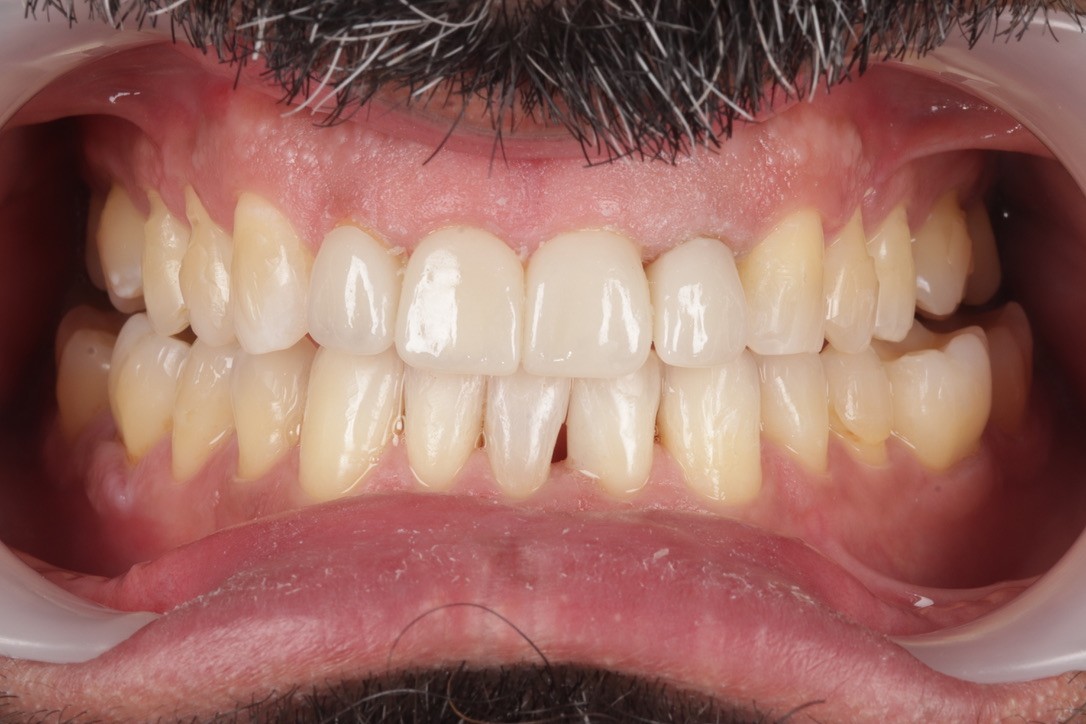
Ortho-Restorative Smile Rehabilitation
ALIGNER & RESTORATIVE DENTISTRY
LL1 extraction followed by clear aligner treatment, whitening and internal whitening of UL2, finished with veneers from UR2 to UL2 to improve alignment, symmetry and overall smile aesthetics.
VIEW ALL CASES →
FREQUENTLY ASKED QUESTIONS
What is restorative dentistry?
When does a tooth need restoring?
Can a fractured tooth be repaired?
What can be done for worn teeth?
Do old fillings always need replacing?
What is a crown and when might one be needed?
Can heavily restored teeth be rebuilt?
Can restorative dentistry improve my bite?
Why might teeth be moved before restorative treatment?
How long do dental restorations last?
How do I look after restored teeth?
Can restorative treatment be combined with implants or clear aligners?
CONSULTATION
Restorative problems can range from a single damaged tooth to more complex changes affecting several teeth and the bite. A consultation allows us to understand what has happened, assess the health and function of your teeth and discuss the most appropriate treatment options.
Consultations with Dr Kunal Rai at Meliora Dental, Leeds.